Into The Woods
Music and Lyrics by Stephen Sondheim | Book by James Lapine
Directed by Dan Stearns
Presented by the University of Mississippi Department of Theatre and Film,
Fulton Chapel, November 4-6, 2022.
I knew there would be a challenge in approaching this well-loved classic of musical theater. Our students love Sondheim and they love this show, in particular. They have seen it before and many of them had already performed in the “junior” version. There would be many preconceptions to overcome. I was determined not to direct just “another” Woods. I wanted to challenge myself as a director and challenge the students to consider how they could approach this work with fresh eyes.
I returned to Lapine’s source material, The Uses of Enchantment by Bruno Bettleheim and thought hard about the place of myth and fairy tales in our cultural imagination. Stories shape our modes of thought and fairy tales are deeply woven into the history of human cultures. I posed the idea that the woods are not real, but a metaphor. This is plainly true in the text, but I wanted to expose that metaphor as such. Lapine’s book already proposes several Brechtian approaches, most notably the narrator who both comments on the action and steps into roles in the story itself. I suggested that the show takes place in an archive of sorts, maybe Jung’s collective unconscious where all our myths and archetypes reside. There is no Into the Woods until the narrator opens the book, so I directed him to search for a book on the shelves among the bric-a-brac. Some of the actors were on stage before the top of the show and I instructed them that they would not know what story they were telling until he spoke. Some of them donned costume pieces on stage and allowed that to inform them as to who they were playing. My goal was to draw attention to the very artificiality of the storytelling mode.
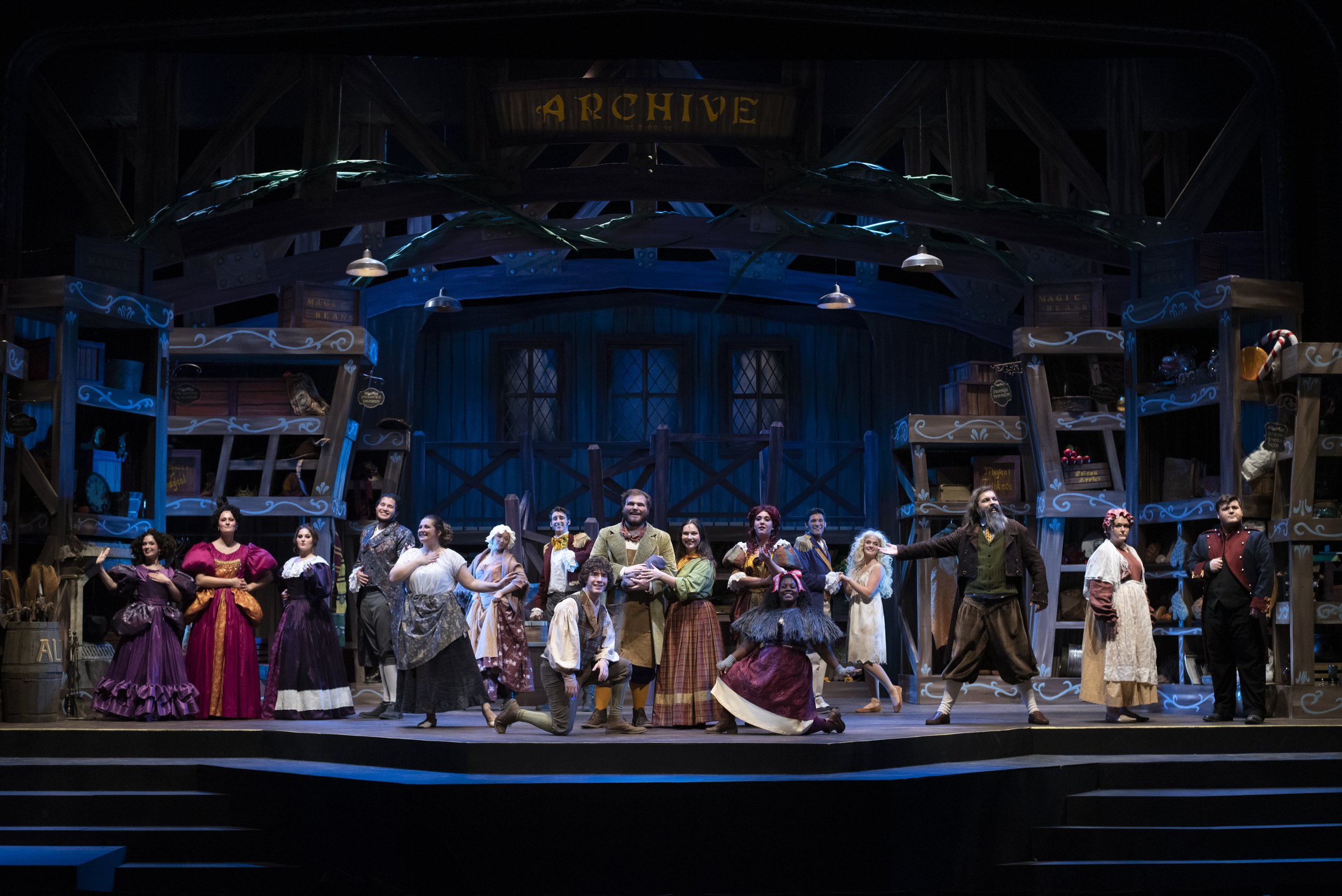
“And happy ever after!”
“Look at the blood within the shoe.”
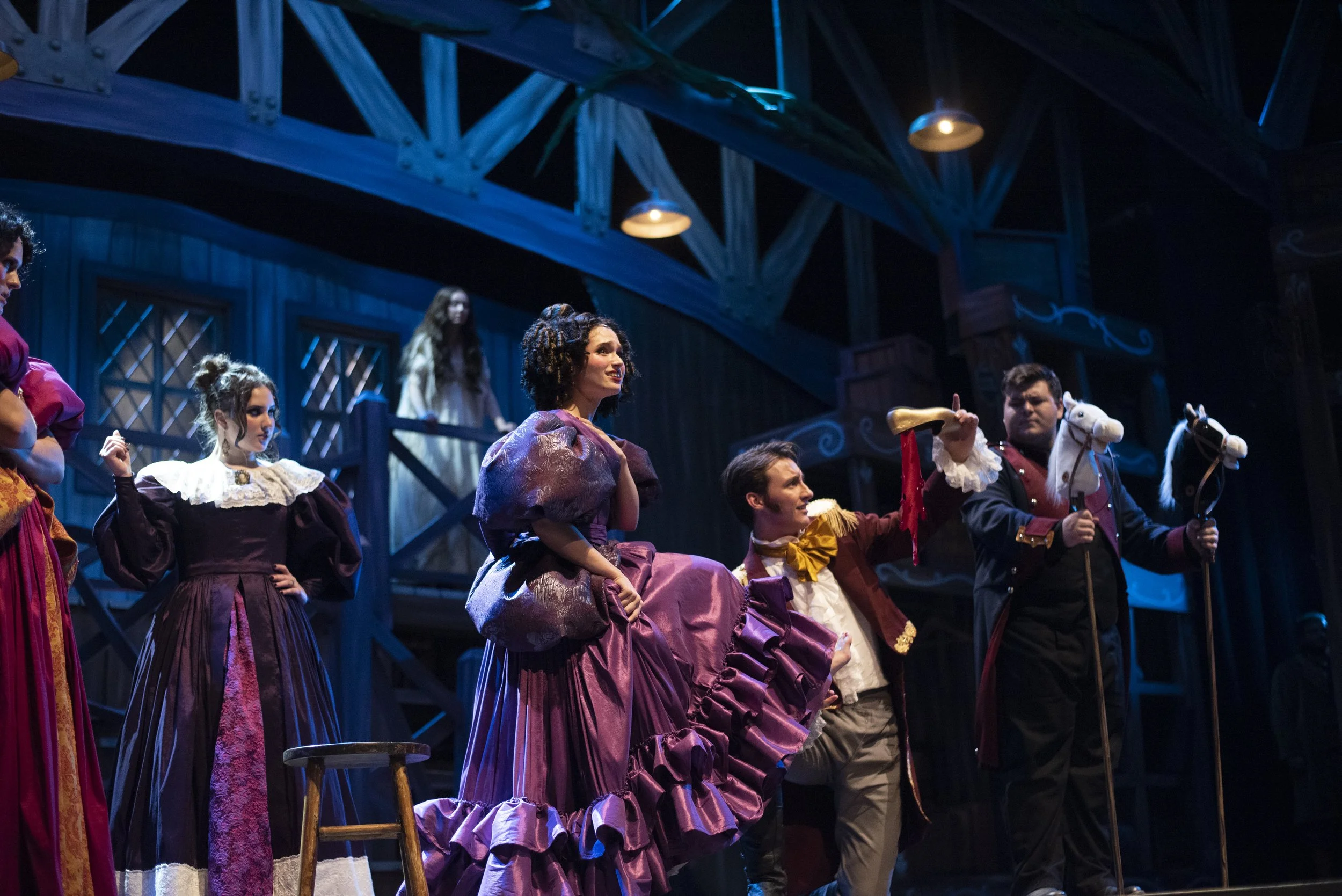
I encouraged the student performers to look deeply into the psychologically disturbing aspects of the tales and not avoid them. The step sisters mutilate their bodies in the hope of marrying a prince. What could be the actor’s personal connection to such an action? What might it mean to the young women in the audience if the action isn’t brushed over in the name of moving the story along? We know the tale, but do we think at all about what its plot actually conveys about personal sacrifice and whether it is worth it.
“I think I see a glimmer.”
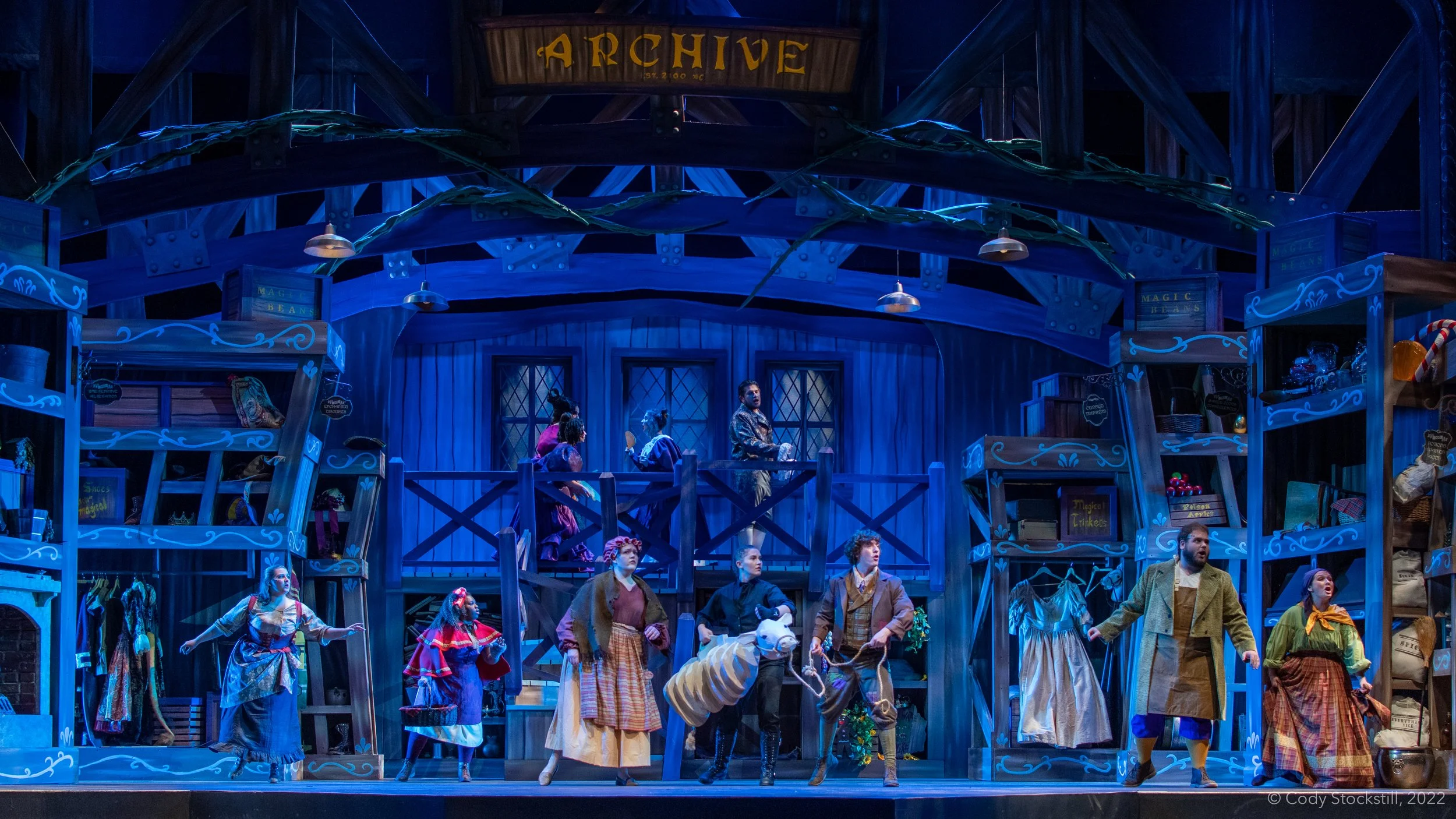
Lost in the dark woods and hoping for a glimmer. At the risk of stating the obvious, the woods, and the journey through them, represent our path in life. It is easy say that life has challenges, but I asked the students what it felt for them personally and individually to feel lost and seeking a glimmer. When do they feel at their loneliest, at their most anxious and puzzled about the future, least sure of their identity or place in the world. I told them they need to bring that to the work. Those truths give it depth.
“There are giants in the sky…"
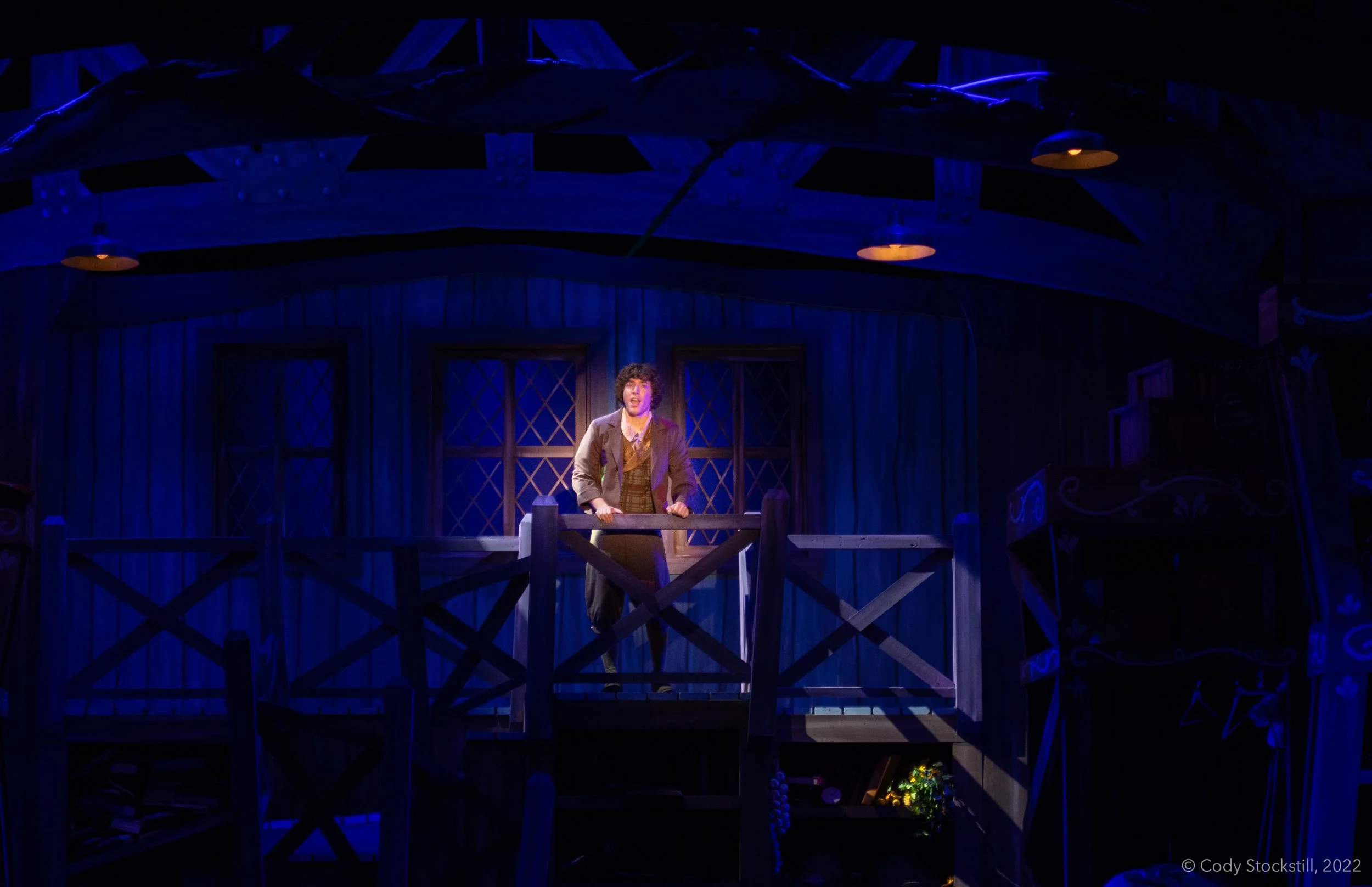
I asked our Jack to think about his relationship with the giant’s wife. The text hints at a deeper relationship between them. “And she gives you food and she gives you rest /And she draws you close to her giant breast / And you know things now that you never knew before…” This song portrays a coming of age. Jack must endure the rite of passage that is slaying the giant. But his passage to manhood is not complete until he has also experienced physical lovemaking. To be clear, I didn’t tell him that he had sex with a giant, I reminded him that the size of the mythological being represents the size of the fear and emotional weight that attends entry into adulthood. I suggested he watch the film “Summer of ‘42” and that he consider the depth of feeling and confusion felt by Hermie in that film.
“Hello, little girl…”
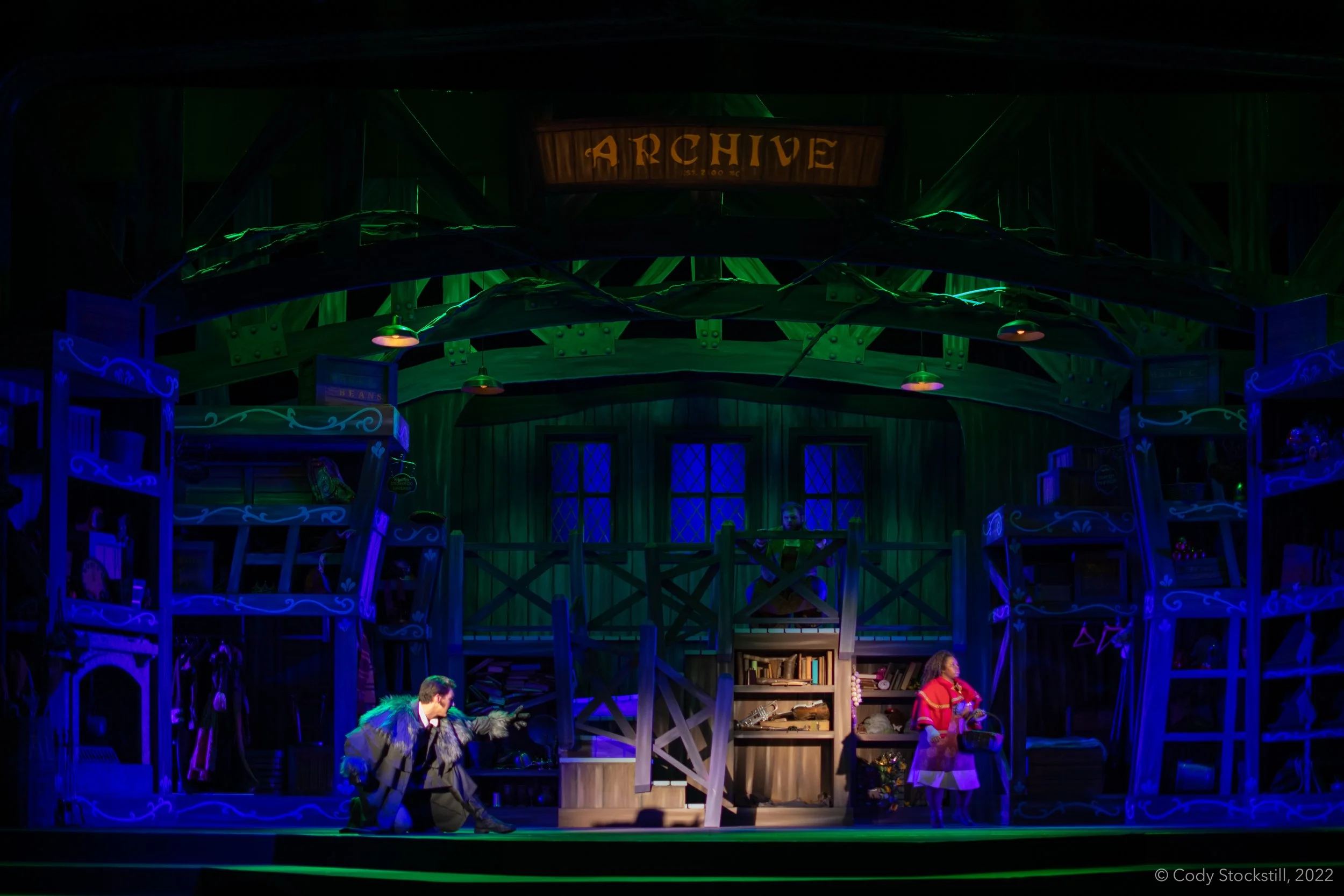
In 2022 how could we not hear this line and immediately think of Jeffrey Epstein, who had died in his jail cell only three years earlier after his arrest on sex-trafficking charges. That is one aspect of this scene to consider. Another is that sex and aggression are closely linked in us and in all animals. I asked the actor playing the Wolf, a thoroughly charming and thoughtful young man, to find in himself the dark side of sexual desire, the desire to possess, to dominate. Red Riding Hood had to think about what it would mean to be devoured. What would it mean to lose oneself in the consummation of the act, to disappear by partnering with a man?
“Agony!”
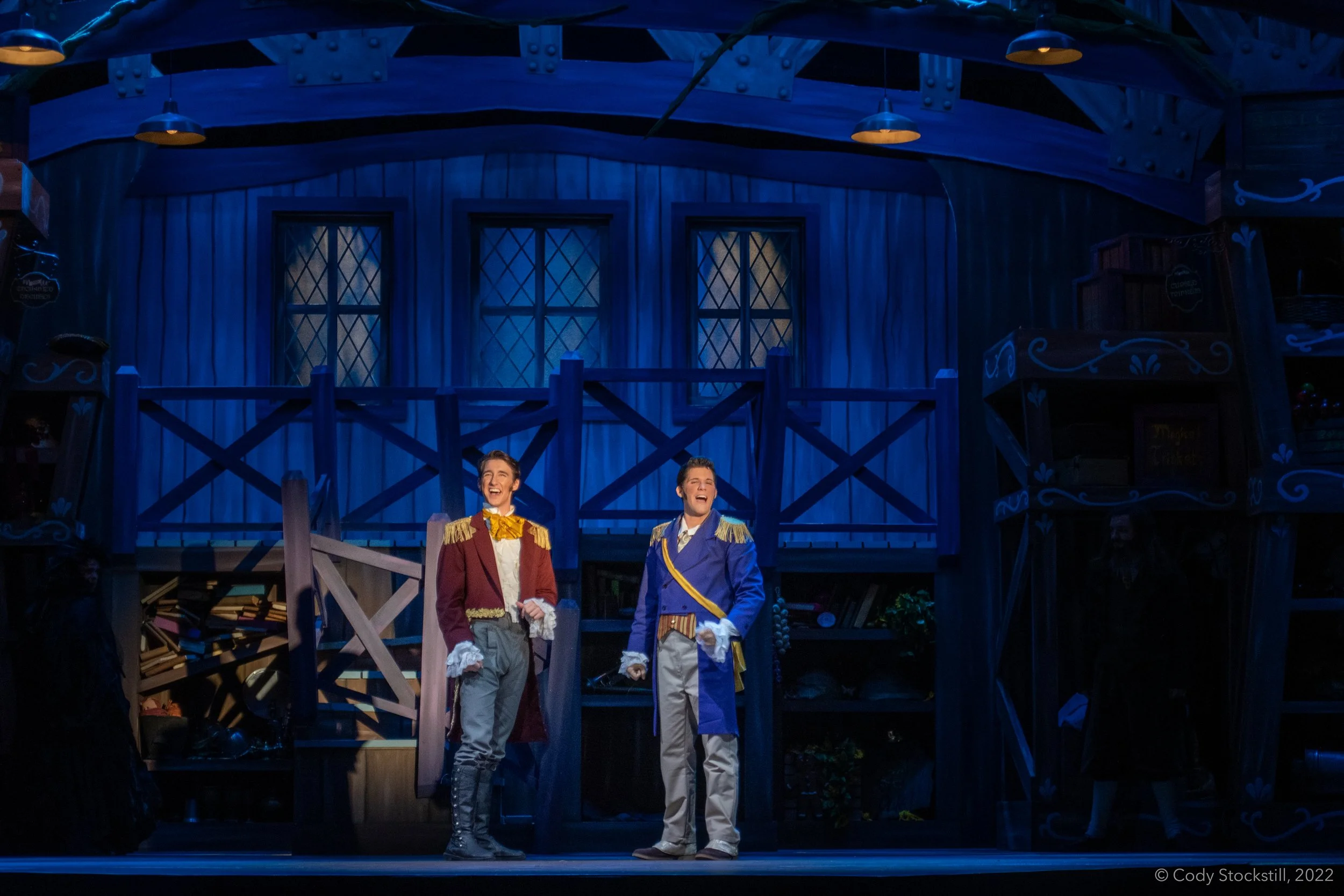
The fovorite number of so many fans of this show. I directed these performers not to get lost in the humor of the song, not to pander to the audience, that the music and lyrics can do the work, but to remember what it feels like to have the worst crush of your life with no hope of even being noticed.
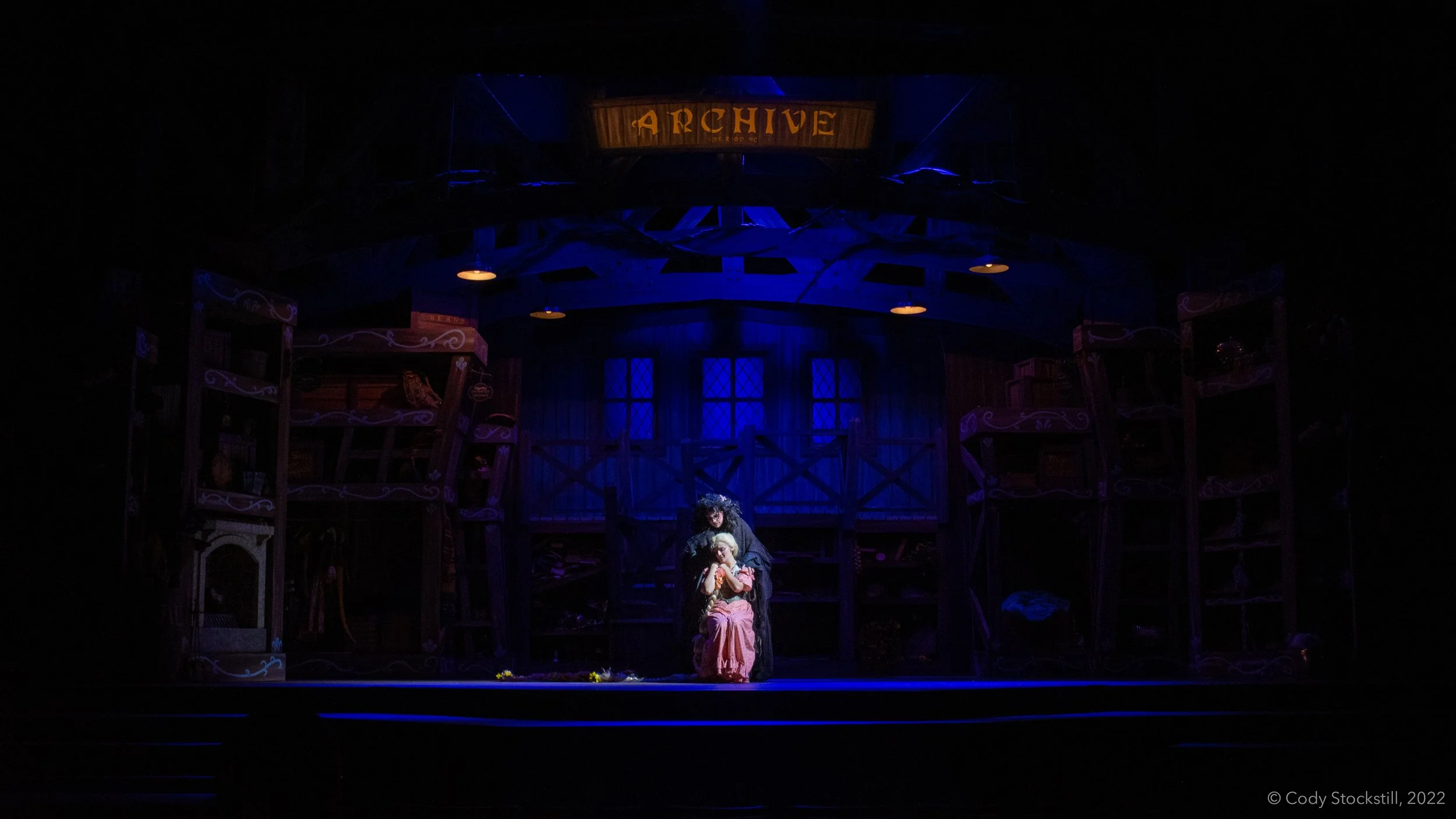
“Stay with me…”
In most cases, college students are leaving the nest for the first time. They have to deal with parental expectations and making a way in the world. In this era of helicopter parenting it may be even harder than in the past. While students usually do a good job of presenting a composed social face, I asked them to think about their parents and to remember that, in the current saying, "The term 'dysfunctional family' is redundant."