Our Town, by Thornton Wilder
Directed by Dan Stearns
Presented by the University of Mississippi Department of Theatre and Film,
Gertrude Ford Center for the Performing Arts, October 3-5, 2025.
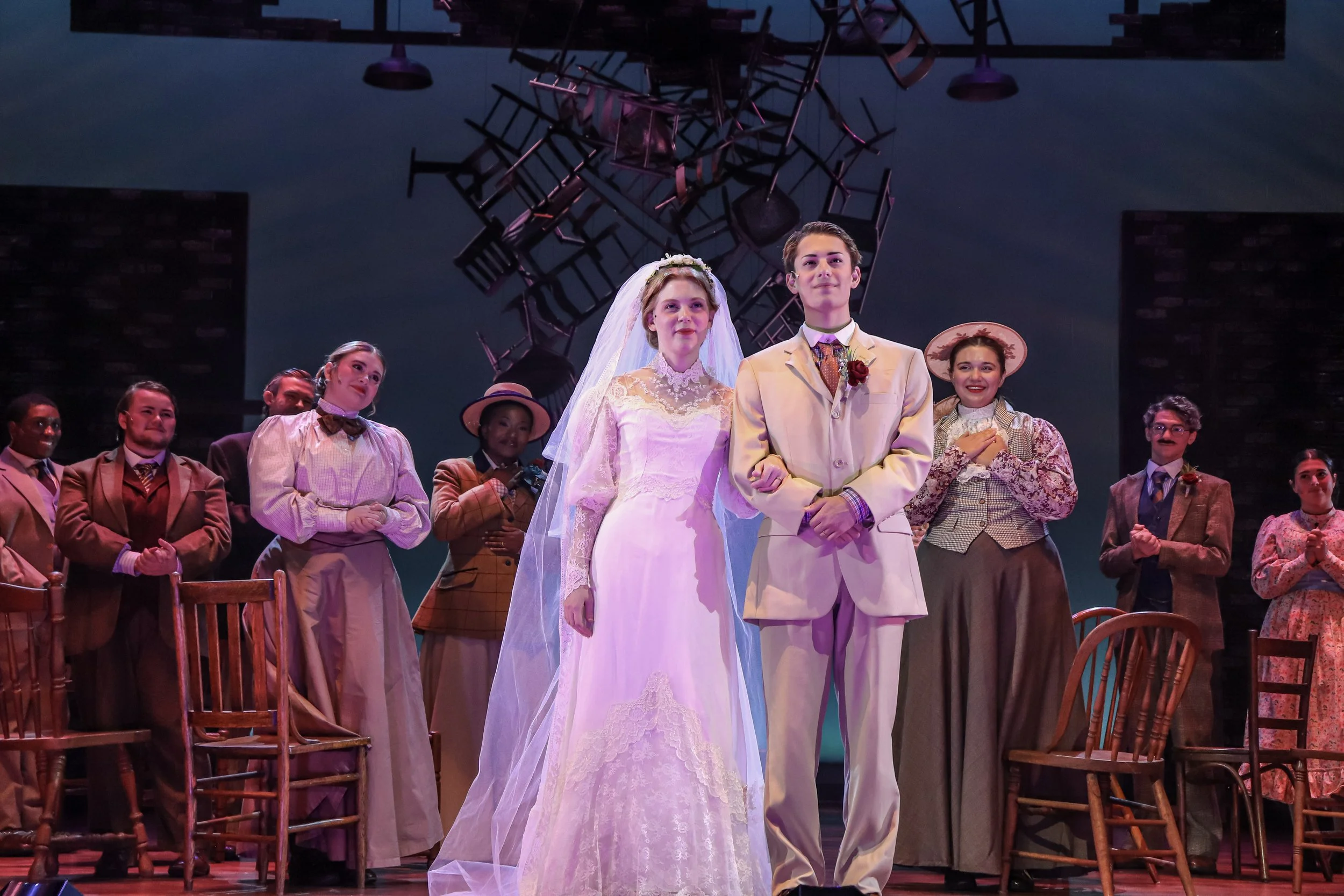
“Don’t know when I’ve seen such a lovely wedding,.”
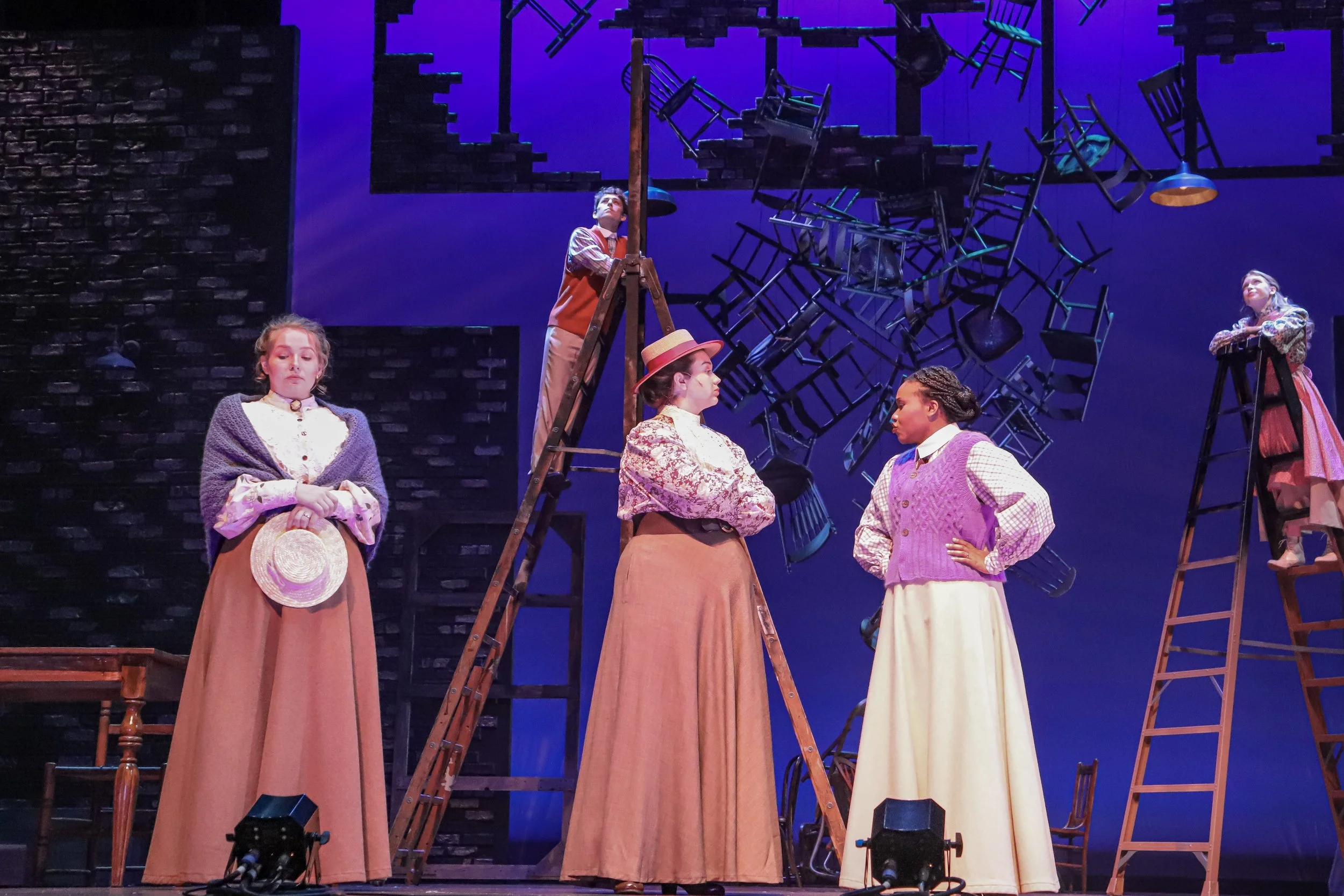
“But Julia, to have the organist of a church drink and be drunk year after year.”
Yet not to thine eternal resting-place
Shalt thou retire alone, nor couldst thou wish
Couch more magnificent.
William Cullen Bryant, Thanatopsis
At the end of act one Rebecca describes the address on a letter she received from a friend: “But listen, it’s not finished: the United States of America; the Continent of North America; Western Hemisphere; the Earth; the Solar System; the Mind of God — that’s what it said on the envelope.”
The people of Grover’s Corners are always gazing to the sky, looking at the moon and stars. They understand their lives sub specie aeternitatis—at least the adults do—and part of the moral theme of the play is that the young must learn to do so, too.
I had hoped to include the archival video of the production, but it appears to have been lost, much to my chagrin, as I feel this was my best directorial work.
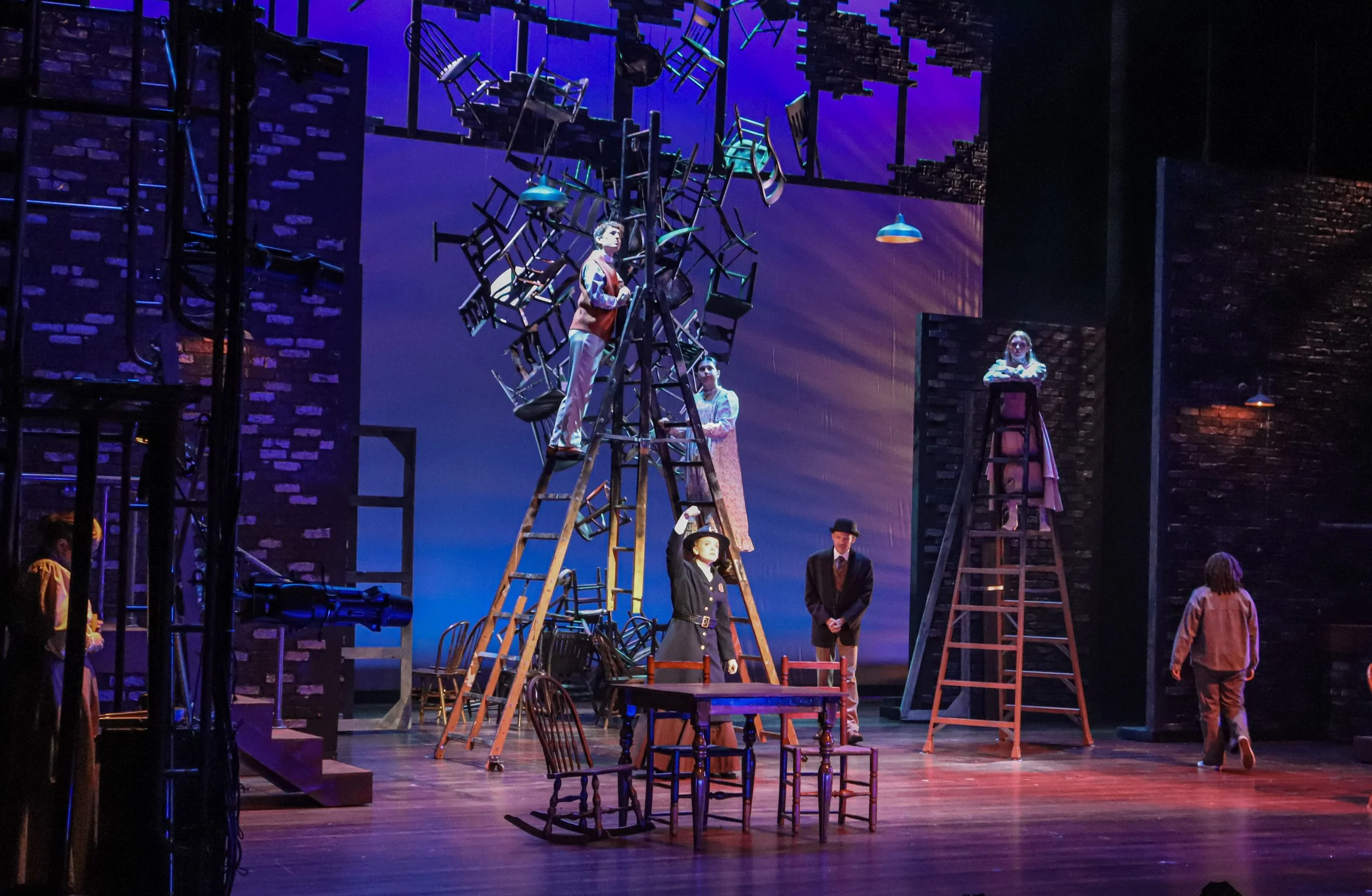
The play was performed without intermission, running approximately 1:45. I was intent on keeping a tidy pace. Actors moved all props, with the help of assistant stage managers from time to time. Actors also created live sound effects—you can see an actor at the stage right SFX station underneath the scaffolding. The design suggests that we are in an old theater, perhaps one similar to the time the play was written. I devised a pre-show in a Brechtian mode that involved performers playing themselves: warming up on stage, checking props, reviewing blocking, or taking selfies. The actor portraying the stage manager behaved as though she was the stage manager of the imaginary theater, going through a checklist, answering questions, dimmer check, finally clearing the actors for places, and then seamlessly beginning her first monologue in character.
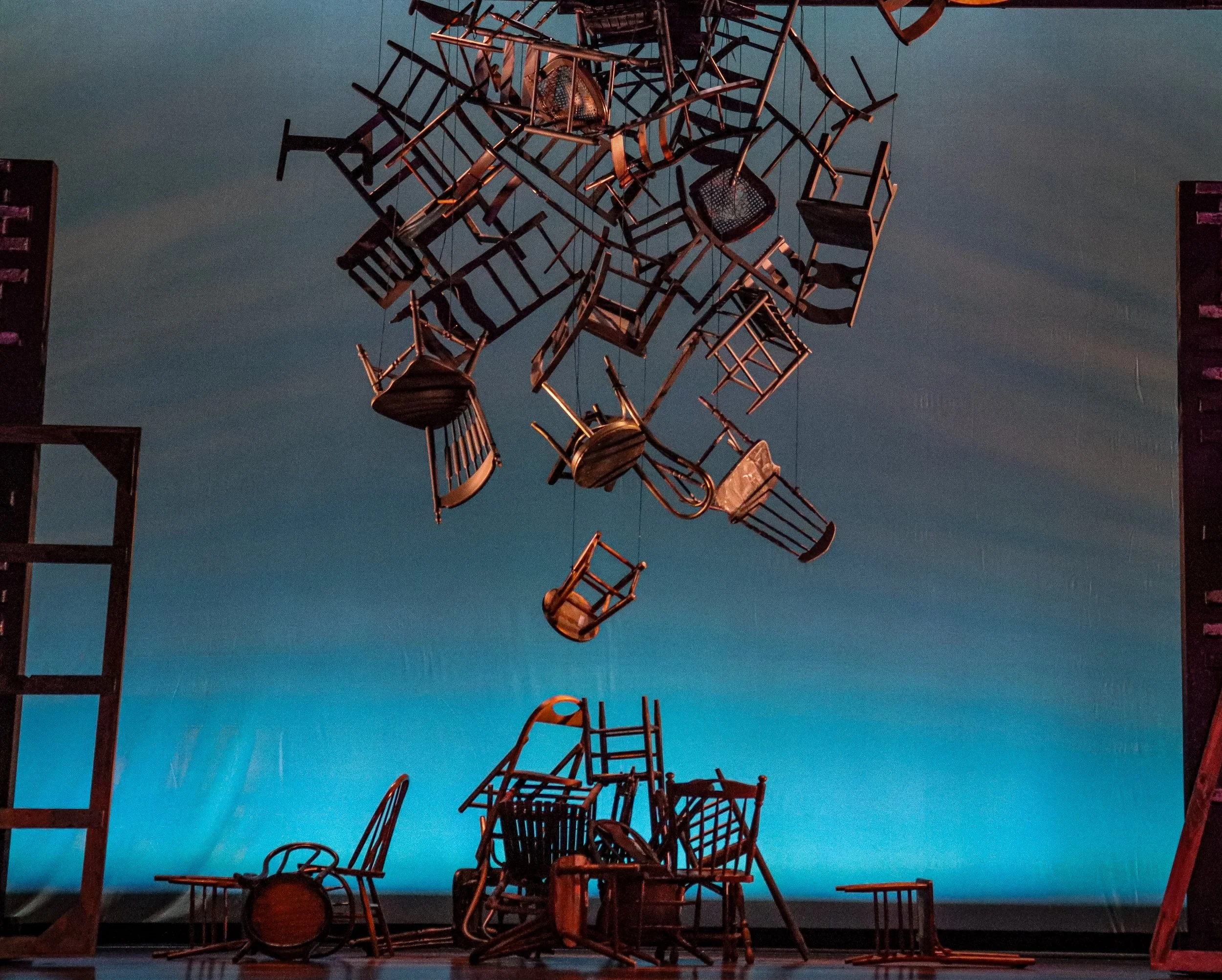
At top of show, before the actors enter, the stage is clear except for the pile of chairs below the suspended sculpture. Even mundane objects like chairs, or Rebecca’s envelope, connect the world above and the world below. Our existence is material and spiritual; mundane and sacred; earth-bound, yet yearning for the beyond.
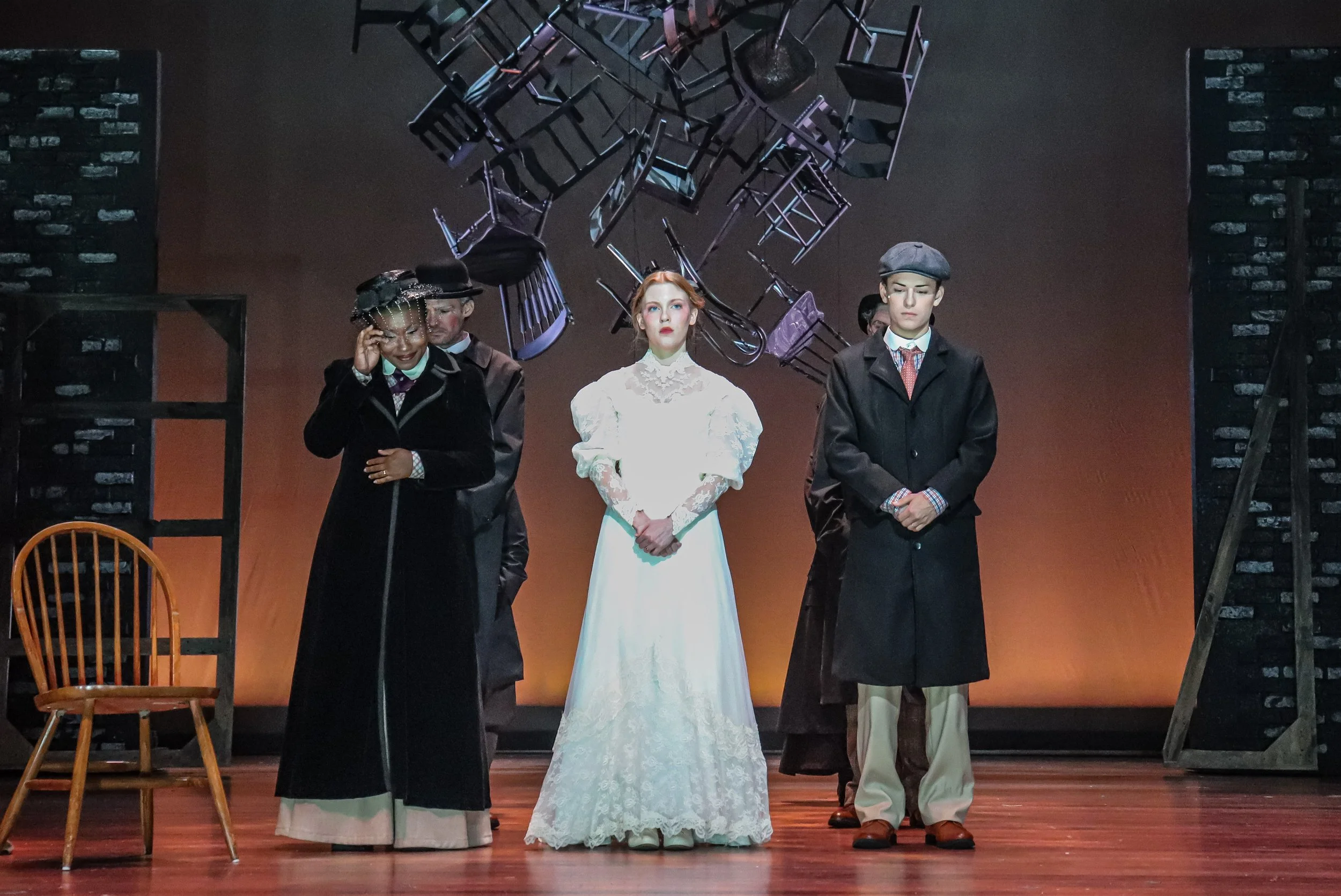
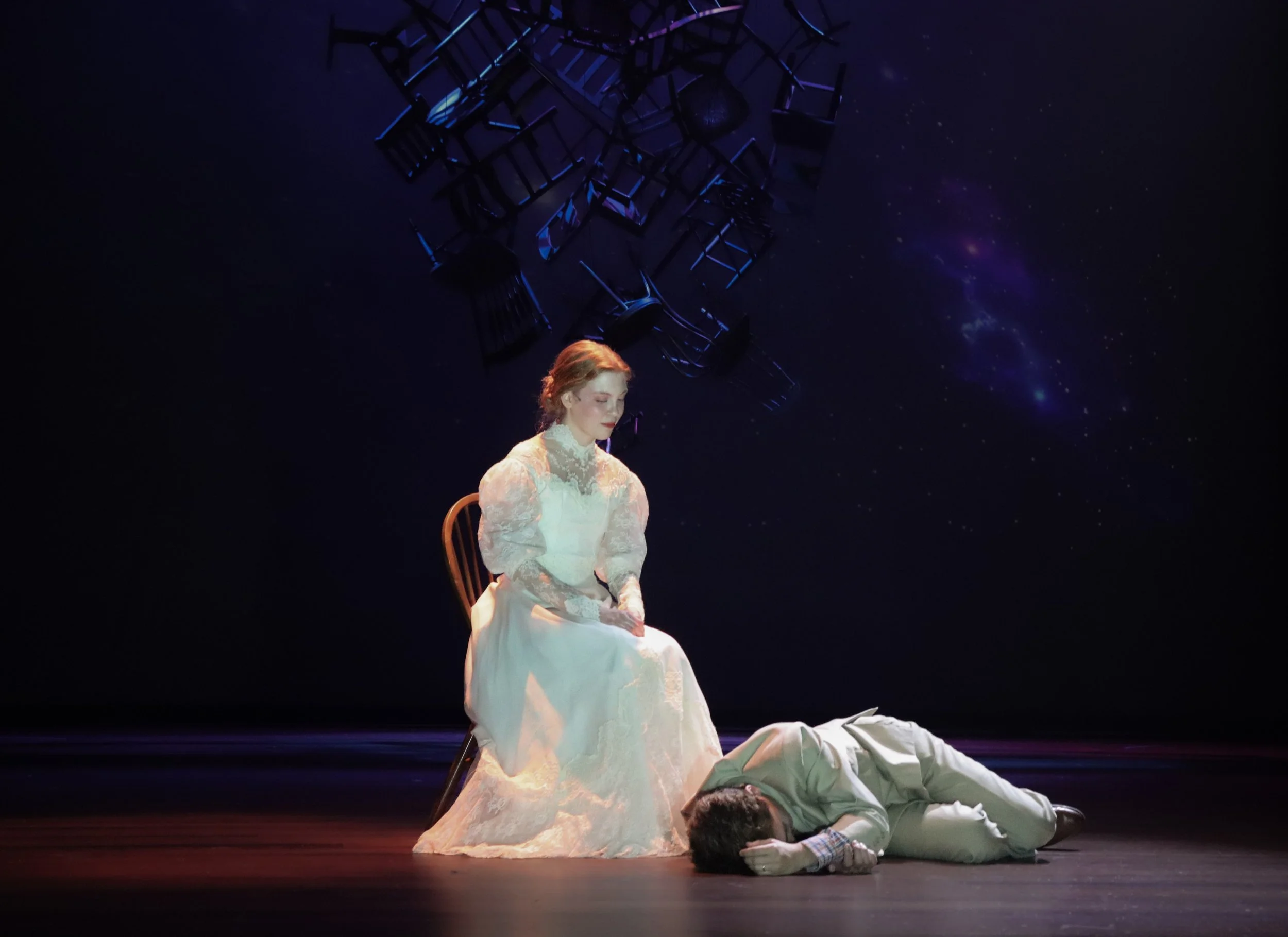
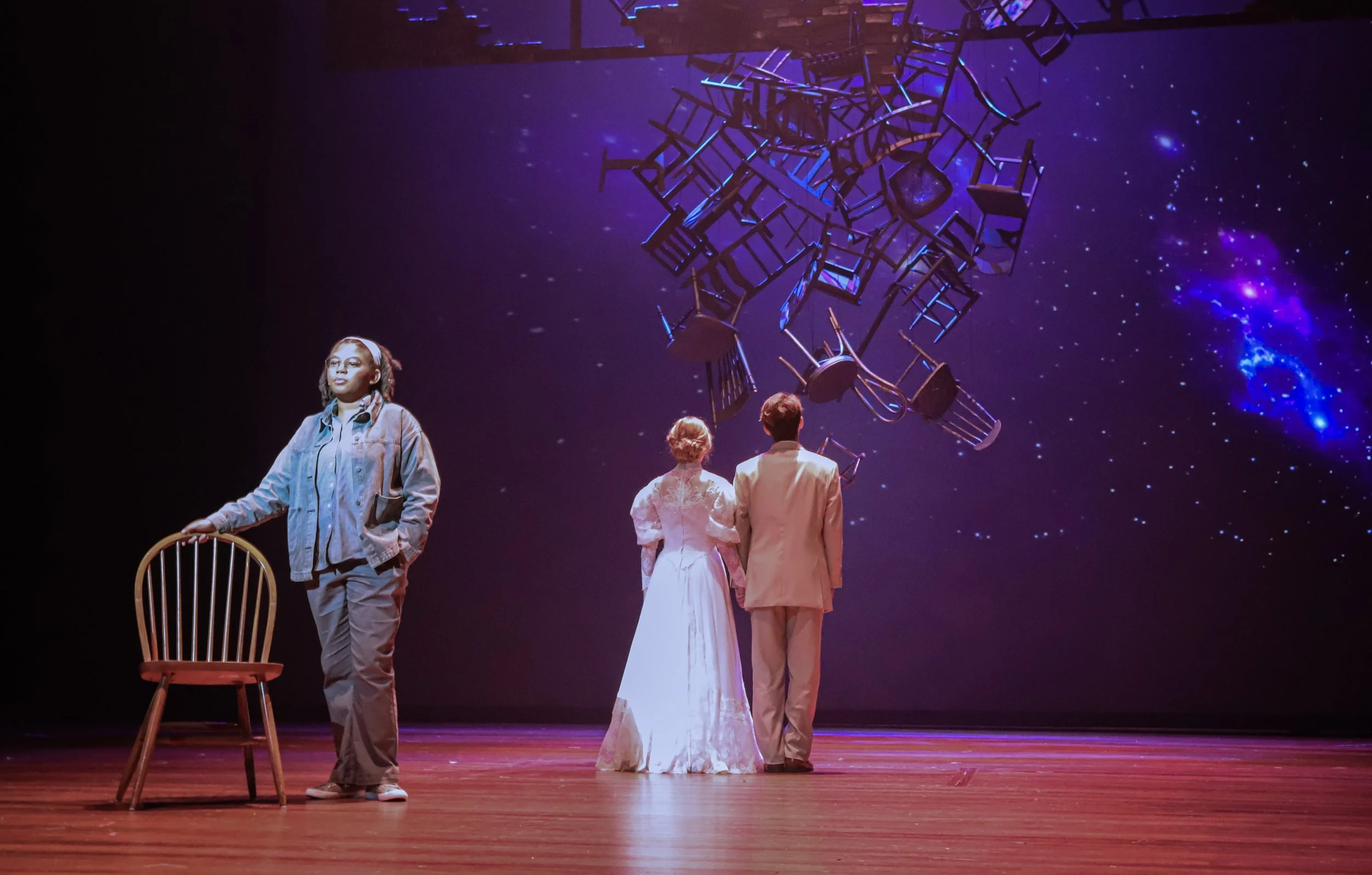
In the final moments, Emily calls George to his feet as he lies before her grave. Together they walk upstage toward the swirling cosmos projected on the screen. Soon we hear the hymn that the church choir sang in act one, “Blest Be the Tie,” and as the couple approach, the sculpture flies out, the flats track offstage, and then the screen itself flies out, revealing…
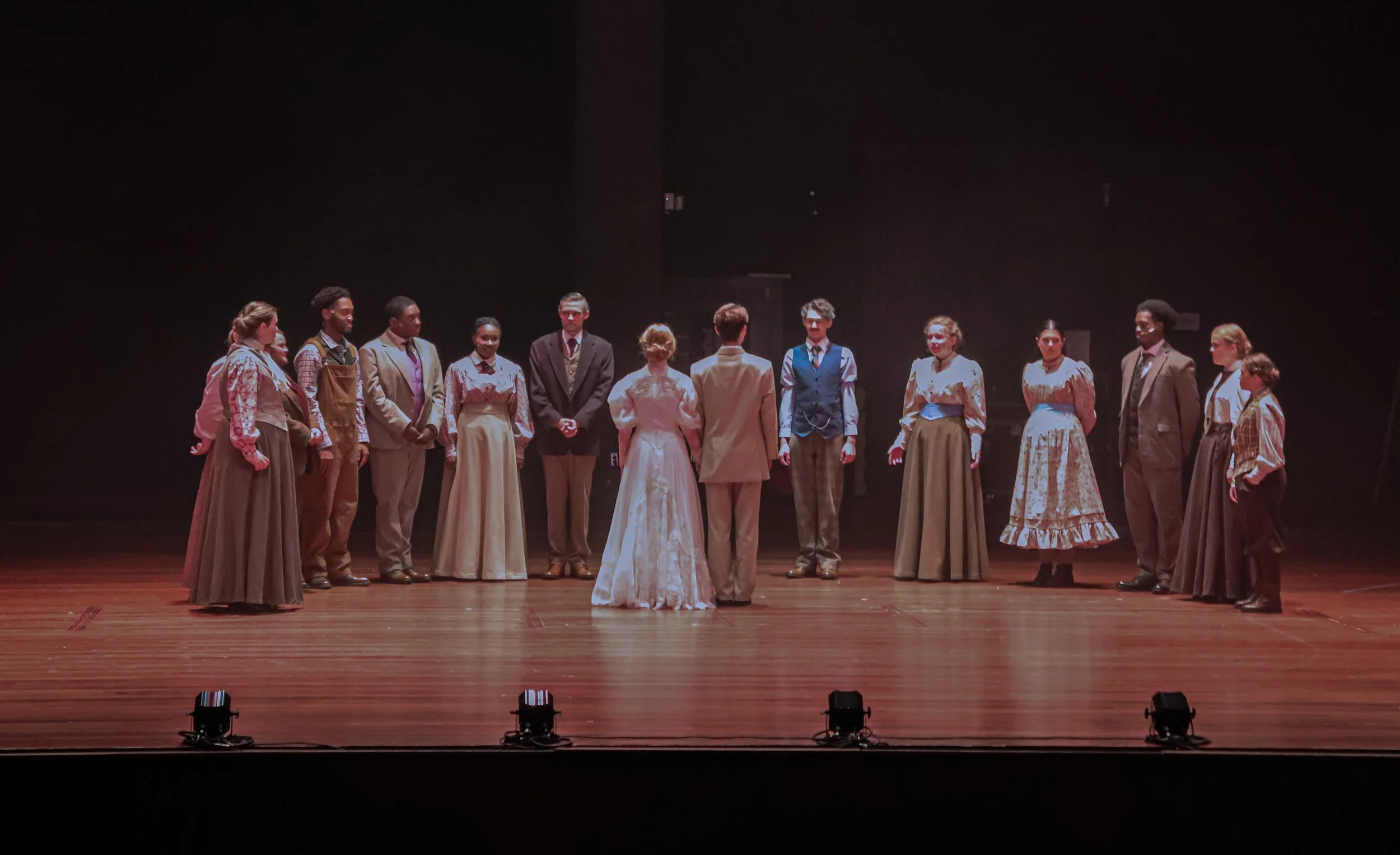
All the people of Grover’s Corners, singing, on the bare stage of the actual theater. They come downstage, gathering George and Emily with them, until they reach the footlights and finish the hymn. Suddenly, without realizing it, we are in a curtain call.
MY DIRECTOR’S NOTE FROM THE PROGRAM
Like many of us—or at least those of a certain age who grew up in New England—I first encountered Our Town in high school English class. I can’t recall what I thought of it at the time, but in my senior year when the theatre guild sought ideas for an evening of scenes, I offered to direct the third act of this very play. I don’t know whether I made much sense I made of it, if any, but I suppose it counts as my first experience directing, nearly forty years ago. I hope that since that time I have grown in my understanding of Our Town and of the practice of direction. I think I have. And I hope that if this is your first time experiencing this classic of the American theatre that you will be captivated by its simplicity and not fooled by its seeming superficiality; that you will be moved by its depth and not tricked by cheap sentimentality; and surprised by its complexity and not too alienated by the modernity of its conception, which was so remarkable in 1938.