Everybody
by Brandon Jacobs-Jenkins
Directed by Dan Stearns
Presented by the University of Mississippi Department of Theatre and Film,
Meek Hall Auditorium, September 27-October 13, 2024.
My director’s program note:
Memento mori. “Remember you will die.” From ancient Rome to medieval monks to the modern revival of stoicism, the reminder that any moment might be our last is a constant, if muted, trope in western culture. We sometimes play a game: what would you do if you knew that tomorrow would be your last day on earth? We squint our eyes, purse our lips, and create fanciful plans, but I think the truth is that most of us, if we reflect deeply, would do little differently. And it is true that nothing is promised to us. We could be snatched from this life at any time, whether by sudden illness, accident, or an ill-considered trigger pull. Yet we do take thought for the morrow, we do want more and better for ourselves and future generations. This is our blessing and our curse as humans; it is our tragedy: to be caught between now and eternity, heaven and earth, stranded in this garden with all the other humans, burdened with the knowledge that you can’t take it with you. Memento mori. Think on it. And throw out your bucket list.
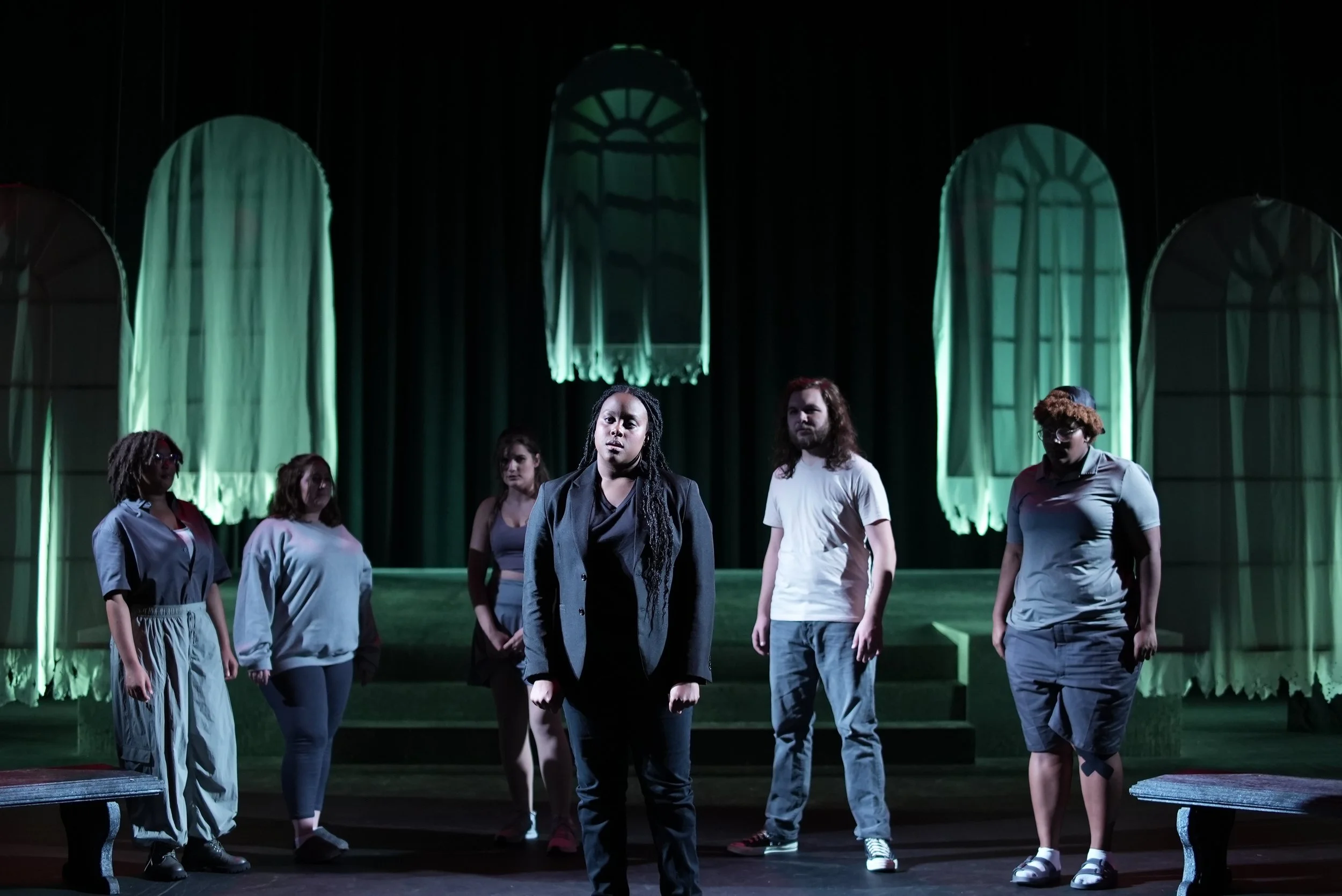
“I’m Death, who fears no man
and it is commanded that all be obedient to me!”
I pushed our students to embrace the serious themes of the play, topics that a young person is disinclined to think about: mortality, ethics, the precariousness of existence. At the same time, I wanted them to find the playfulness in the experimental qualities of the drama. How will Everybody find his way to the life beyond? Will anyone or anything accompany him?
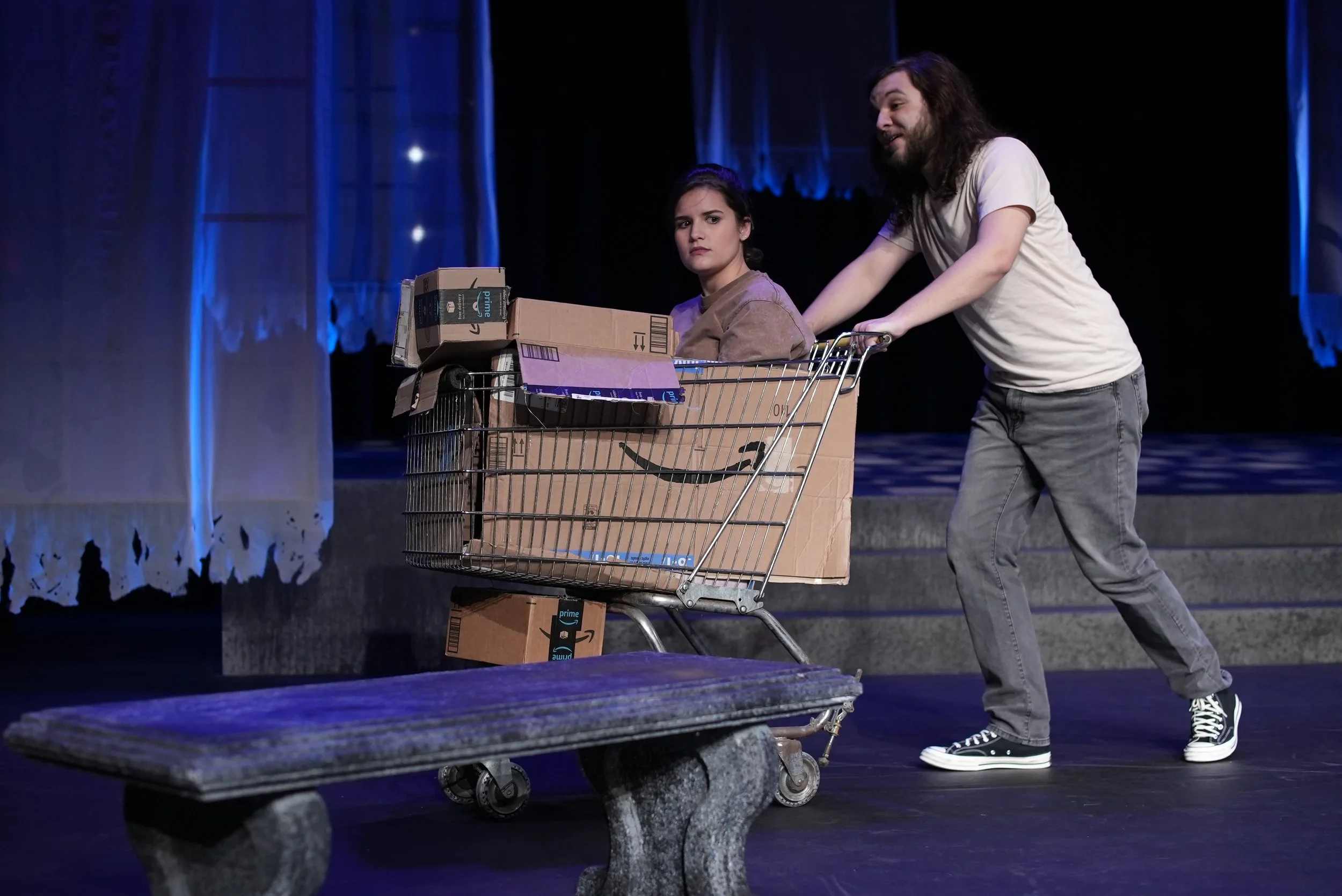
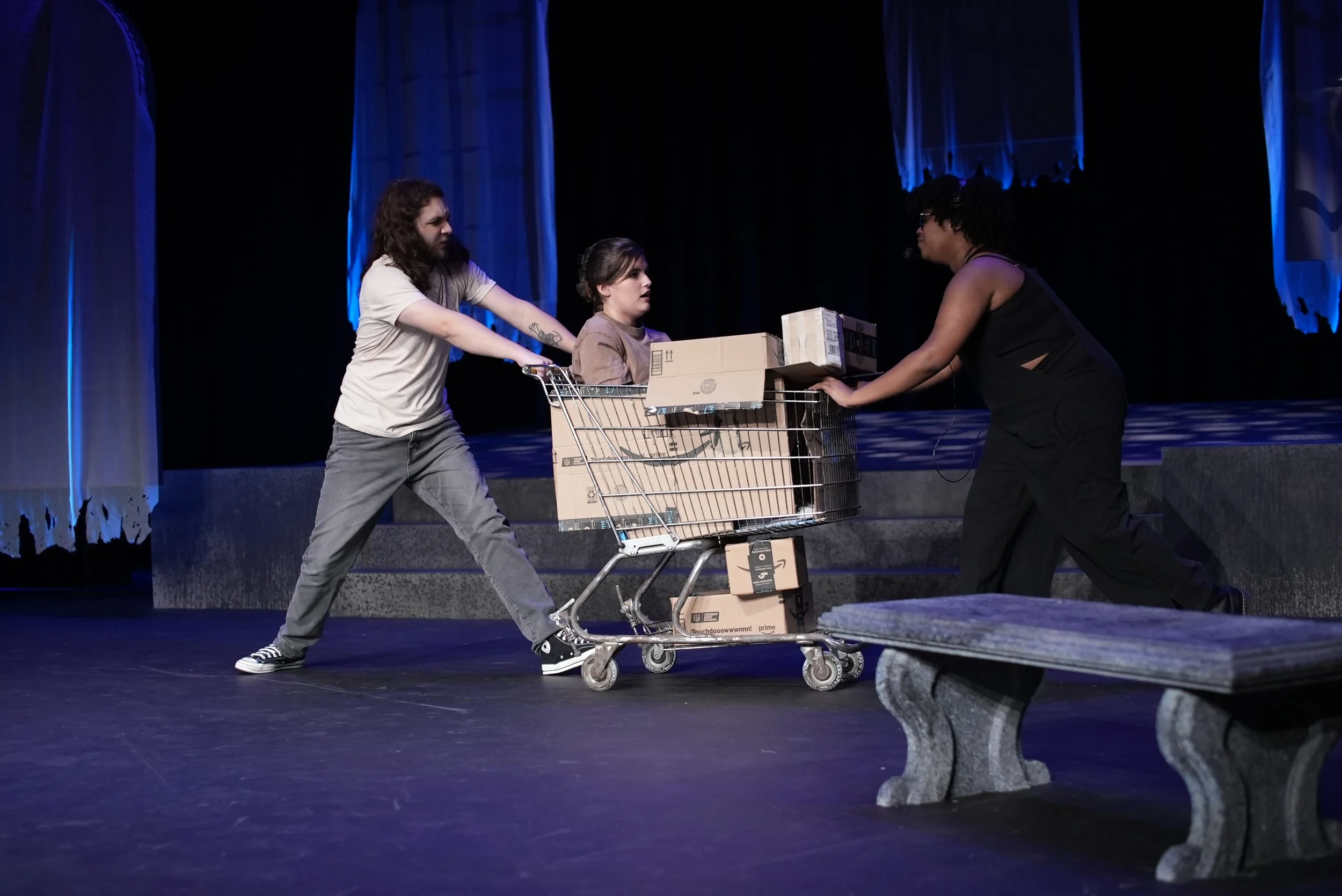
Stuff is a pile of delivery junk shoved on stage by the ASM. When she wants to leave Everybody fights with the ASM to keep his stuff.
“Do you think that I belong to you?”
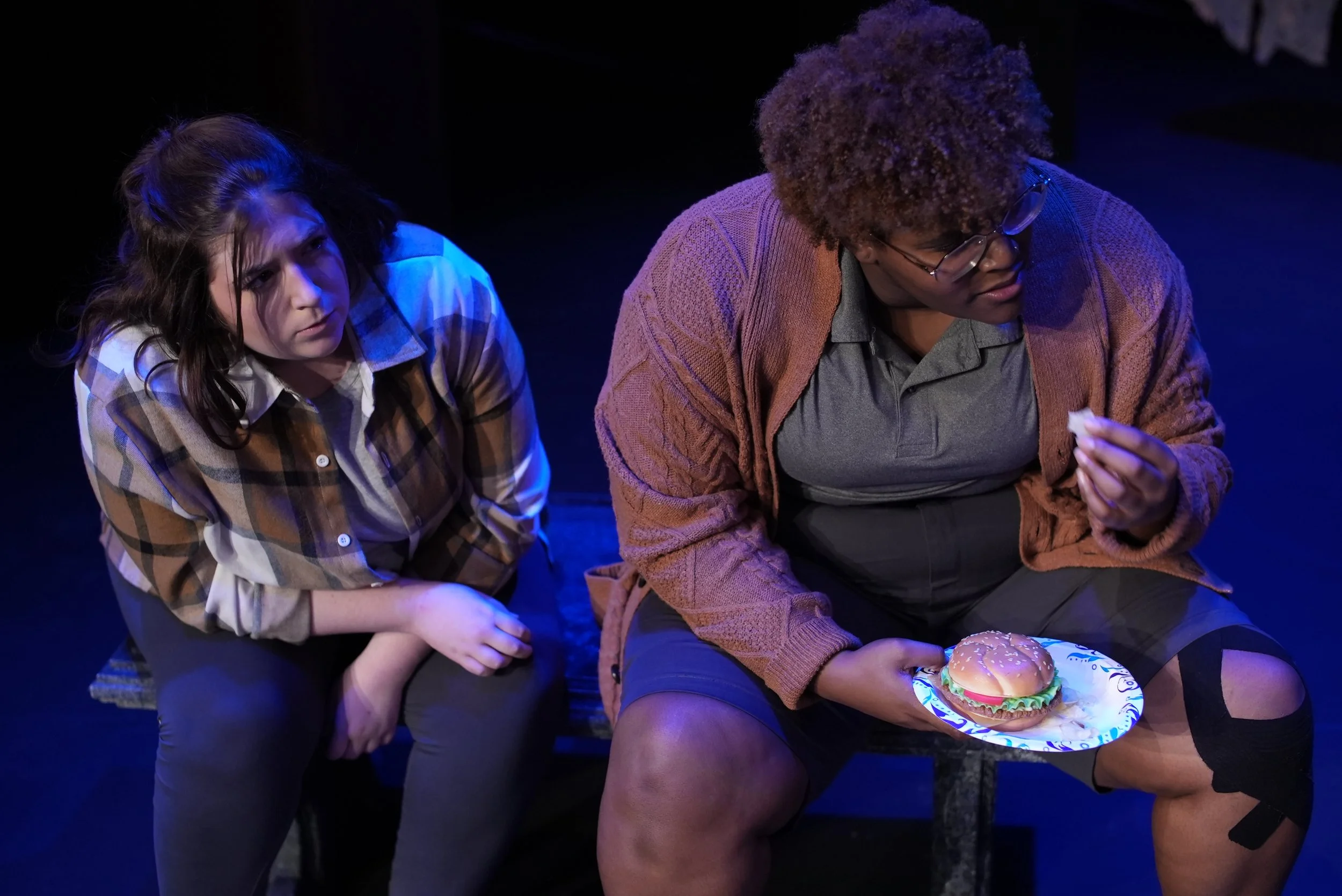
Cousin and Kinship are visiting at a backyard cookout. But a burger and beer are not enough to convince them to join him.
“I‘m absolutely 100% positive that you’ll find some family member other than me…”
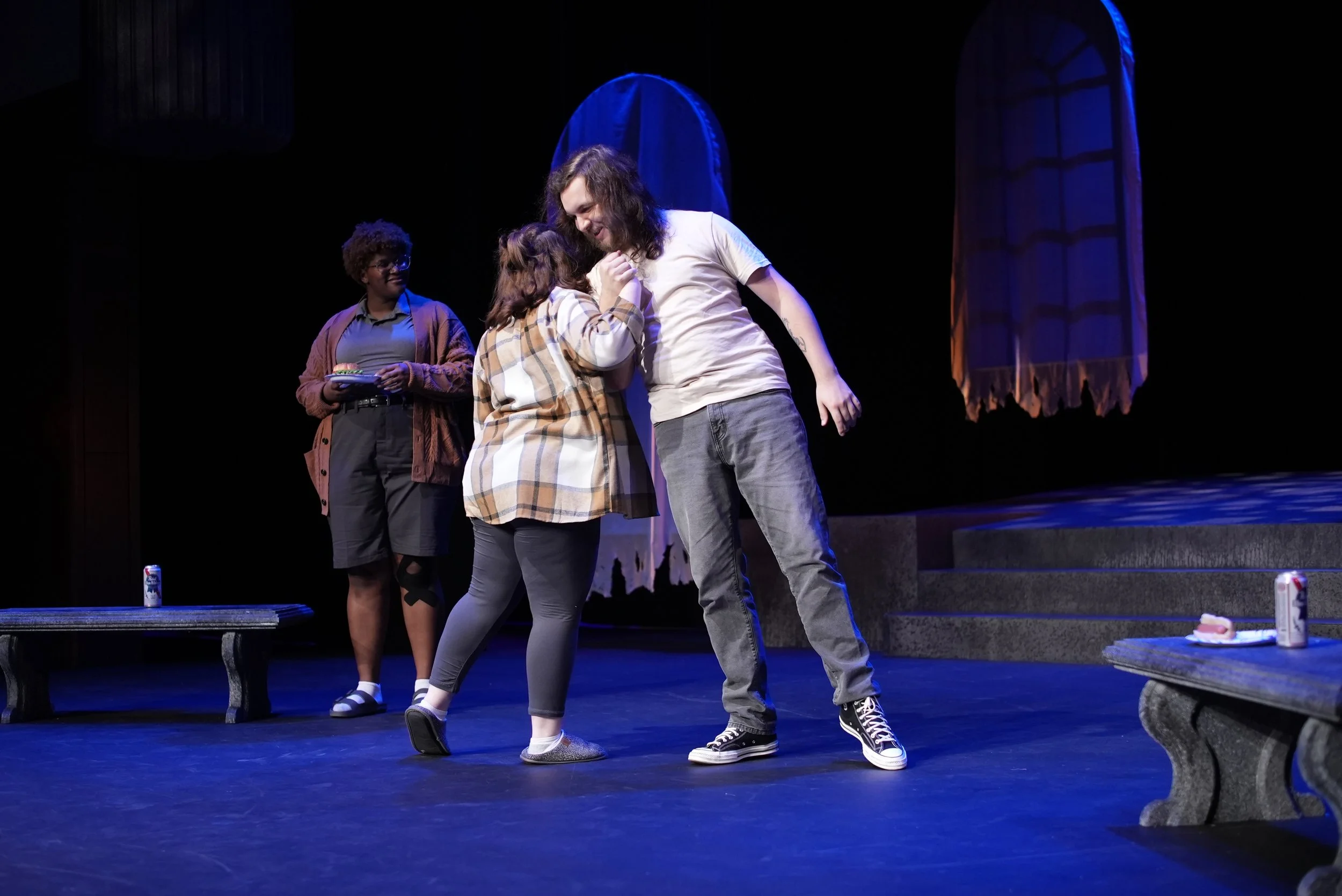
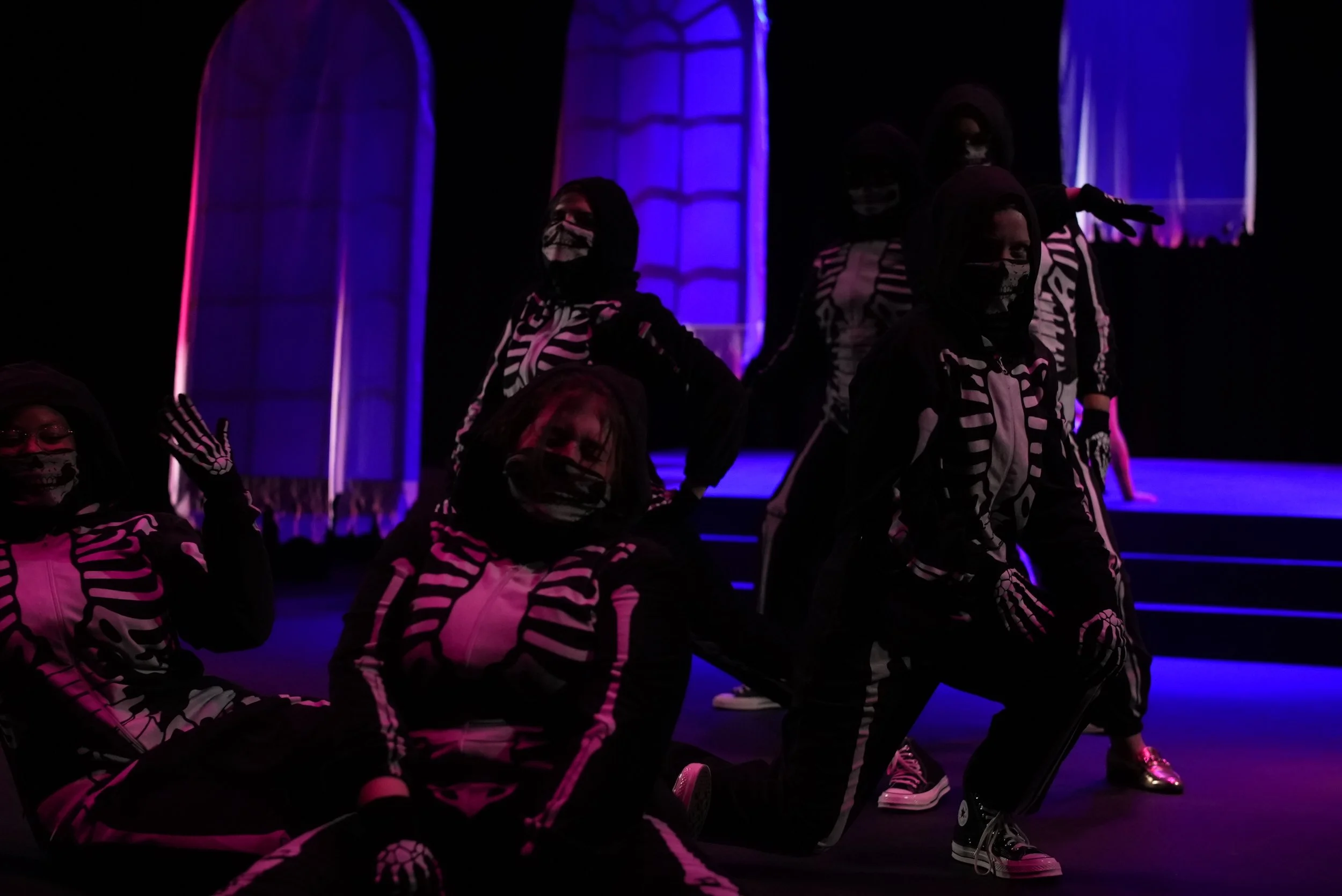
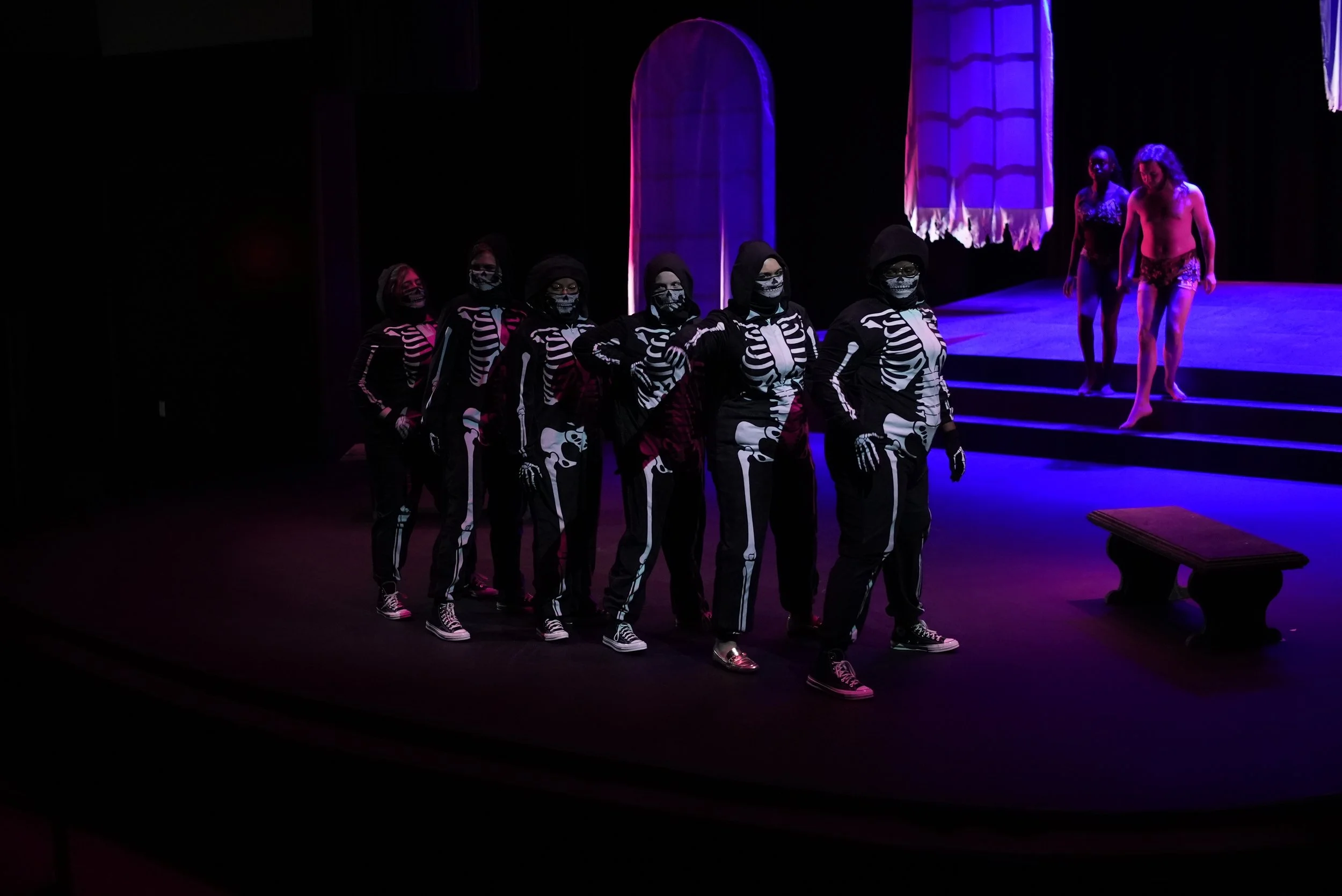
I knew that full-frontal nudity would at a minimum cause a furor among our student audiences and take them out of the play, if not causing calls for a ban, so I decided to focus on the archetypal images evoked by the text. When Love breaks down Everybody and forces him to strip his clothes, as she herself will do moments later, his modesty is preserved by fig leaves, an additional archetypal image I brought to the play. A dance macabre follows that cathartic scene of Everybody’s abasement, as skeletons dance a burlesque to the familiar song “The Stripper,” by David Rose, in a striking and humorous juxtaposition.
The design concept, in a bid to make the play relevant (that most dangerous of dramaturgical ideas) to our audience was to suggest the environs of campus. Stone benches, broad stone steps, and Palladian windows that, depending on how they were lit, might resemble ghosts, a home that has been shuttered, or the shape of a tombstone. When death climbs out of the grave after taking Everybody, the cloths drop and the audience can see themselves reflected in the glass of the windows.
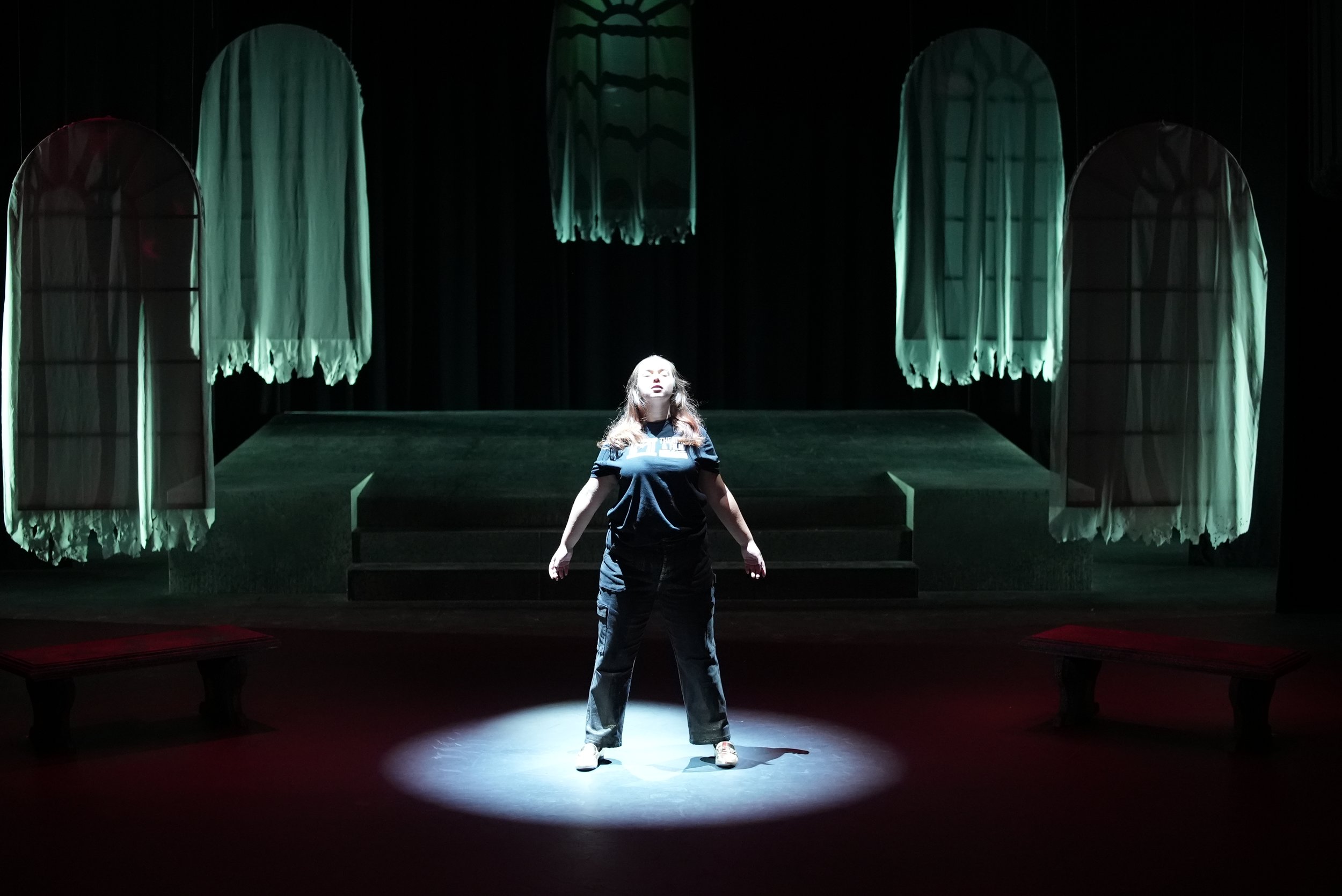
“‘GOD.’ THIS IS ‘GOD.‘“